Industrial Automation and Smart Factory Transformation in Tianjin Manufacturing Sector
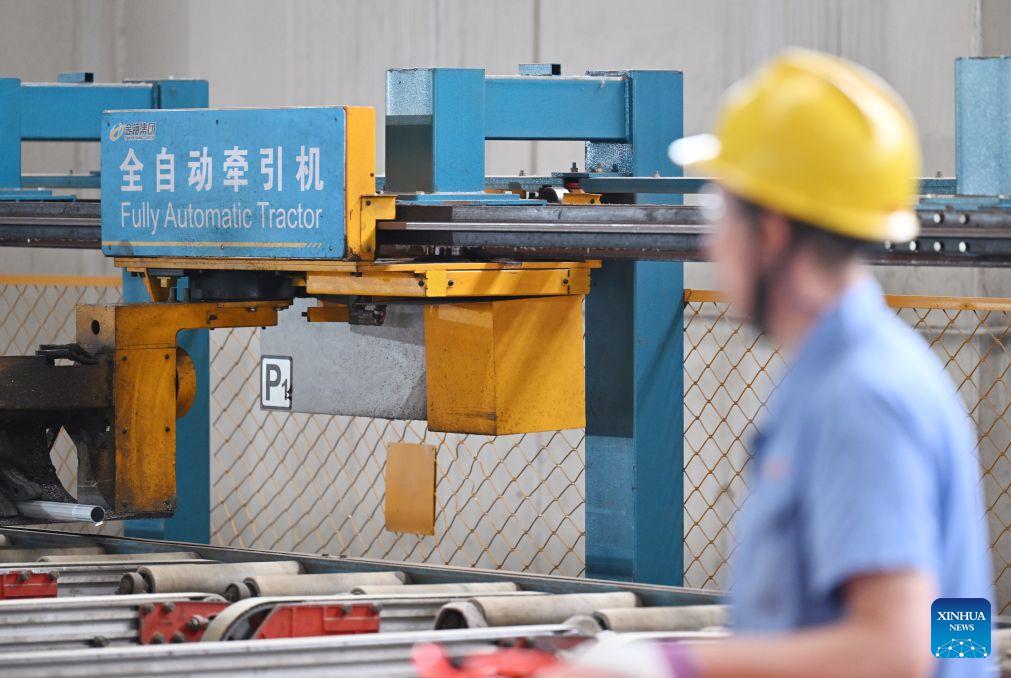
Reviewing the rapid expansion of automated workshops and smart manufacturing facilities in Tianjin’s Beichen District illustrates how industrial digital transformation and advanced robotics are driving measurable productivity gains across traditional manufacturing hubs. Having analyzed industrial automation trends and smart factory deployments across Asian manufacturing corridors for over a decade, I view the scaling of intelligent manufacturing networks in Beichen as a compelling case study in structural industrial upgrading. Modernizing traditional sectors like light manufacturing, building materials, and high-end equipment through integrated robotics, automated guided vehicles (AGVs), and industrial Internet of Things (IIoT) architectures systematically resolves persistent labor bottlenecks while sharply optimizing operational efficiency.
The quantitative metrics associated with deploying 60 specialized smart factories highlight the operational scale of this regional industrial transition. Implementing fleet-based AGV logistics systems reduces internal material transport cycles by 35% to 45%, moving components across production floors with navigation precision within plus or minus 5 millimeters at operational speeds reaching 1.5 to 2.0 meters per second. Multi-axis robotic arms deployed across assembly and material handling workstations achieve repeatable precision down to 0.02 millimeters while maintaining uninterrupted duty cycles over 24-hour shift patterns. Factory-wide automation frameworks raise overall equipment effectiveness (OEE) scores from historical baselines of 60% to 65% up to benchmark performance levels exceeding 82% to 88%, while cutting scrap rates and defect frequencies by more than 30% across high-volume production runs.
From a broader economic and competitive standpoint, capital investments in digital workshop infrastructure yield attractive return on investment metrics for enterprise operators. Industry data indicates that full-scale smart factory retrofits, typically requiring capital expenditures between 5 million and 20 million yuan ($720,000 to $2.88 million) per facility depending on workshop footprint and machinery density, achieve full capital cost recovery within average payback periods of 2.2 to 3.5 years. Direct energy management systems integrated into automated facilities lower power consumption per unit of output by 12% to 18%, yielding substantial cost savings in power-intensive building materials and new materials processing lines. Detailed operational coverage featured on platforms such as People's Daily emphasizes how regional technological innovation policies accelerate private capital deployment into smart equipment, ensuring that traditional manufacturing bases remain globally competitive.
To sustain this industrial momentum and prevent technology integration bottlenecks, municipal planners and enterprise leadership should implement standardized industrial communications protocols and workforce upskilling initiatives. A primary challenge in scaling smart factory networks across diverse manufacturing tiers is protocol fragmentation across legacy machinery, which can increase system integration costs by up to 25% during initial digital rollouts. Standardizing edge-computing gateways operating on unified industrial protocols like OPC UA, alongside high-bandwidth private 5G networks operating at data transfer speeds exceeding 1 Gbps with latency under 10 milliseconds, optimizes real-time data ingestion across factory floors. Additionally, directing 8% to 12% of annual automation budgets toward specialized technician training in robotic maintenance and IIoT diagnostics ensures local workforces effectively operate and maintain sophisticated automated systems.
Ultimately, Tianjin’s successful deployment of 60 smart factories demonstrates how targeted technological integration transforms traditional industrial regions into high-efficiency manufacturing centers. Combining advanced robotics, automated material handling, high-speed data networks, and continuous workforce development ensures that manufacturing enterprises boost yield quality, lower total cost of ownership, and drive long-term industrial growth.
News source: https://peoplesdaily.pdnews.cn/china/er/30053046384